



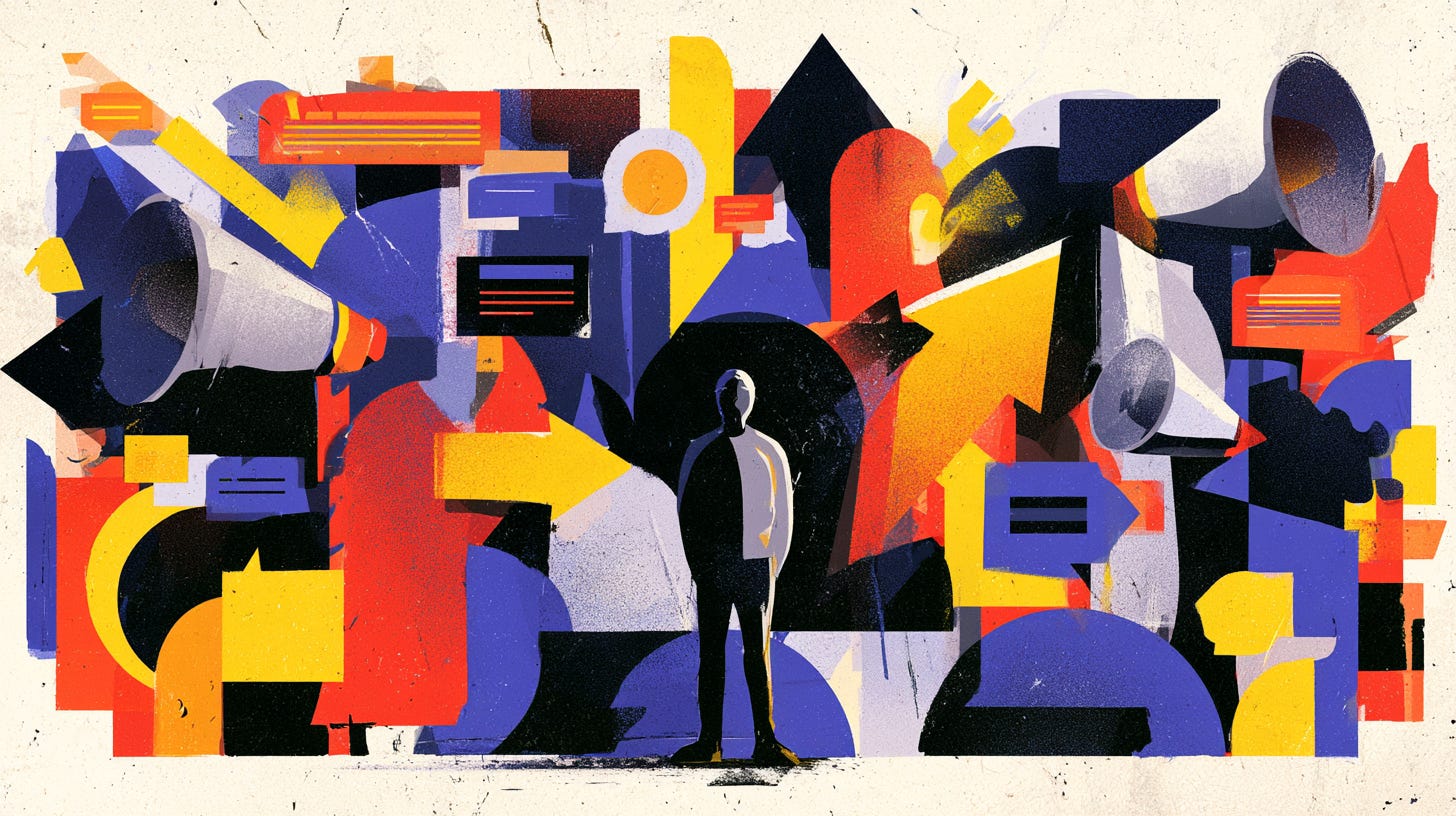
For most of my career, attention has been treated like the scarce resource. Marketing departments bought it. Agencies fought for it. Brands measured it in impressions, clicks, ratings, open rates, share of voice and, eventually, whatever new metric the latest platform decided mattered. The underlying assumption was always pretty simple: if enough people see you, some useful percentage of them will eventually care.
That equation has changed. Attention isn’t exactly scarce anymore. Given enough money, persistence, or willingness to feed the algorithms, almost anyone can get in front of an audience. A founder can manufacture a steady stream of LinkedIn posts before breakfast. A small company can produce advertising that would have required a full creative team a decade ago. AI can generate articles, video, images, sales copy, and entire campaigns faster than most of us can decide whether any of it is worth making. We solved a large part of the distribution problem. In the process, we created a much harder one.
People no longer struggle primarily with finding something to look at. They struggle with deciding what deserves to be believed. That distinction matters because attention and trust behave very differently. Attention can be purchased, engineered, and occasionally stolen. Trust is slower. It accumulates through consistency, judgment, competence and the uncomfortable requirement that what you say keeps matching what you actually do. A clever campaign might buy thirty seconds of somebody’s day, but no media budget can force that person to believe the person on the other side of it. In fact, the harder something appears to be trying to manufacture credibility, the more suspicious we’ve become of it.
You can see the consequences everywhere. Perfectly polished thought leadership that says almost nothing. Executives borrowing language from whatever management idea is fashionable that quarter. Websites filled with synthetic imagery of synthetic people doing synthetic work. Videos delivered with the cadence of someone who has spent more time studying how experts are supposed to sound than developing an opinion worth hearing. None of these things are necessarily dishonest. That’s almost what makes the problem interesting. They’re frequently the result of people trying so hard to appear credible that they accidentally remove all of the evidence that a real person is there.
The opportunity for leaders is therefore becoming strangely old-fashioned. Know something. Believe something. Be able to explain why. Admit where the edges of your knowledge are. Show up consistently enough that people can compare today’s claims with yesterday’s behavior. There will always be tricks for earning another click, another view or another moment in somebody’s feed. But in an environment overflowing with content, the leaders who matter won’t necessarily be the ones who become best at producing more of it. They’ll be the ones whose audience has learned that when they speak, there is probably something worth hearing.
Few people have watched that relationship between attention and credibility as closely as this Eggs! The Podcast guest, Dominic Forth. After more than two decades working across journalism, broadcasting, advertising and media strategy, Dominic has seen firsthand what makes an audience stop, what makes a message travel and, perhaps more importantly now, what makes people trust the person delivering it. Today, as CEO of Thought Leaders America, much of his work sits directly inside that increasingly valuable space between simply being visible and actually becoming believable.
From Newsrooms to Thought Leadership

Dominic Forth has spent more than two decades working at the intersection of media, messaging and audience behavior. He began his career training with the BBC, where he developed an early grounding in journalism, interview ethics and the mechanics of telling a story responsibly. After moving to the United States, his career took him through radio, local media, advertising, promotions and sales, giving him a close-up view of the decisions that determine which stories get attention—and which are quietly overlooked.
That experience eventually stretched across several very different markets, including Kansas City, Tampa, San Francisco, Oklahoma and Colorado. Along the way, Dominic worked with local businesses, advertisers and major media organizations, including Fox in San Francisco, where he saw firsthand how quickly audiences make judgments about what feels credible, relevant or worth watching. Focus-group research became a particular area of interest, showing him how seemingly small details—from presentation style to visual cues—could change the way a message was received.
Today, Dominic is the CEO of Thought Leaders America, where he works with entrepreneurs, executives, founders and experts who have something meaningful to say but often struggle to make that message visible. His work centers on helping them clarify their stories, sharpen their point of view, prepare for media appearances and build authority in a way that feels credible rather than manufactured. In a media environment where attention can be bought almost instantly, Dominic’s work is increasingly about the harder problem: making sure the audience believes the person who earned it.
Getting Attention Is Only the Beginning
Visibility can open the door, but what happens afterward determines whether anyone stays. Dominic’s experience across journalism, advertising and media training offers a useful look at what turns a moment of attention into something far more durable.
“Attention is almost cheap these days. You can buy attention pennies on the dollar with certain ad placements, but trust is priceless.”
Actionable insight: Treat attention as an invitation, not an accomplishment. A click, view or media appearance may introduce you to someone, but credibility is built through what they find once they start paying attention.
“If that’s fake, what else is fake?”
Actionable insight: Small signals matter more than most brands realize. Overproduced imagery, artificial environments or claims that feel inflated can create doubt well beyond the thing that triggered it. When trust is the goal, believable usually beats perfect.
“You have to start telling your story to get the feedback from other people of what’s interesting and what’s not interesting.”
Actionable insight: Don’t wait until your message feels finished. Put your ideas into conversations, presentations, interviews and writing, then pay attention to where people lean in. Strong points of view are often discovered in public before they’re polished in private.
“People try and ship the finished product. ‘I’ll speak when I’m ready because I’ve got to finish the story.’ But if you don’t get that feedback, then you’ll never get to the finished story.”
Actionable insight: Perfection can become a convenient form of hiding. The leaders who communicate well usually got there through repetition—saying the thing, hearing how it lands, tightening it and saying it again.
“You need to lead with your opinion first to hook people.”
Actionable insight: Expertise isn’t demonstrated by unloading everything you know. Start with the judgment your experience has earned you. Give people the conclusion worth paying attention to, then support it with the facts.
“What are the stakes?”
Actionable insight: Information becomes meaningful when people understand why it matters. Whether you’re pitching a client, leading a team or appearing on a podcast, make the consequence clear. Without stakes, even useful information can become background noise.
“It’s really the journey of being interviewed that is the most important, because it’s not until you’ve got a few reps in and you see the response, you get the questions, sometimes a question you’re not expecting—that’s where the coaching really starts to kick in.”
Actionable insight: Authority is developed under pressure, not merely prepared for beforehand. Put yourself in situations where people can question your thinking. The gaps you discover there are often more useful than another hour spent polishing the presentation.Make the Decision Before Time Makes It for You
The Long Game Is Belief
There’s no shortage of ways to get noticed anymore. The harder question is what happens after someone notices you. Do they believe you? Do they remember what you said? More importantly, does your track record give them a reason to come back the next time you speak?
That’s where the real work begins. Trust isn’t built in a launch, a campaign or a single great interview. It’s built in the accumulation of small moments where your words, judgment and actions continue to line up. That may be slower than chasing reach, but it also creates something far more durable than reach ever could.
The leaders and brands that stand out in the years ahead may not be the loudest or the most prolific. They’ll be the ones who become known for saying something worth hearing—and for proving, over time, that they mean it.
Thanks for reading.
—Ryan
If you’re ready for life to feel more intentional, more aligned, and more within your control, this guide gives you the structure to make that shift real. Your next version starts with a single decision. Get the field guide
Ready for more?
Catch the interview in its entirety on Eggs! The Podcast.
Don’t miss a show! Subscribe on Spotify, Apple Podcasts, or really anywhere great podcasts are found.
Path Picks
Cool stuff to help you forge your path to greatness.
Note: The Path Weekly is reader-supported. As such, I may be using affiliate links below. If you want to support the newsletter at no additional cost to you, please consider using the links below. If you’d rather not, most items below are widely available anywhere you want to shop. Thanks! –R
Reading list
If you're looking to go deeper on the themes from this week's newsletter, here are a few books that pair well with the conversation and offer a broader perspective:
The Speed of Trust — Stephen M.R. Covey
A natural companion to this week’s central idea. Covey makes the business case that trust isn’t merely a soft cultural virtue; it has real economic consequences. When trust is high, organizations move faster and friction falls. When it disappears, nearly everything becomes harder and more expensive.The Trusted Advisor — David H. Maister, Charles H. Green & Robert M. Galford
Originally written with professional services in mind, but broadly useful for anyone whose business depends on clients believing their judgment. The book digs into the behaviors that separate someone who merely possesses expertise from someone people actually trust enough to follow.Made to Stick — Chip Heath & Dan Heath
Getting attention is one thing. Making an idea survive contact with an audience is another. The Heath brothers examine why certain messages are remembered, repeated and acted upon while others disappear almost immediately—a useful complement to Dominic’s discussion about sharpening ideas for media.Storyworthy — Matthew Dicks
One of the more practical books on discovering stories hiding inside ordinary experience. That connects directly with Dominic’s point that you often don’t fully understand your own story until you begin telling it, hearing the response and discovering which moments carry more meaning than you realized.The Practice — Seth Godin
Godin’s argument is less about waiting for confidence, inspiration or the perfect finished product and more about consistently putting meaningful work into the world. That fits nicely with Dominic’s advice to stop waiting until the story is finished and start getting the repetitions that ultimately make it better.
More to explore
Learn more about our featured guest — start here:
Thought Leaders America — https://www.thoughtleadersamerica.com/
Authority Brief — https://authoritybrief.com/
Dominic Forth on LinkedIn — https://www.linkedin.com/in/dominic-forth/
Thought Leaders America on LinkedIn — https://www.linkedin.com/company/thoughtleadersamerica/
Thought Leaders America on YouTube — https://www.youtube.com/@ThoughtLeadersAmerica
Would you like a personal introduction to this or any of the incredible leaders featured in The Path Weekly to explore business or other collaborative opportunities?
Contact me here to learn more about my B2B matchmaking service.
Want to put your brand in front of 13,000+ business and technology leaders each week? Contact me to learn more about sponsorship opportunities.
Work with me
RŌG Health - A commercial readiness and strategy firm for medtech companies, helping CEOs identify what’s blocking growth and make clear, de-risked decisions around commercialization, partnerships, and fundraising.
https://roghealth.com
Ryan Roghaar - Artist/Creative Director/Author
https://rogha.ar
Eggs! The Podcast - https://www.eggscast.com
Get featured
Do you want to be featured in a future edition of The Path Weekly?
Contact me to learn more.