




There was a time when being busy was seen as a pretty decent proxy for being important.
The packed calendar. The late-night email. The laptop open at dinner. The casual mention that you “haven’t had a day off in weeks.” For a long stretch there, especially in entrepreneurial circles, those things became a kind of social proof. If you were exhausted, you must have been building something. If you were unavailable, you must have been in demand. If you were buried, you must have been valuable.
I bought into that more than I care to admit.
For years, my default mode was: go. Sit down. Make the thing. Build the website. Design the brand. Ship the work. Take the call. Answer the message. Start the next idea. Keep moving. And to be fair, execution matters. A lot. Nothing gets built in theory. But execution can also become a hiding place. It lets you feel productive without forcing you to ask the harder question: productive toward what?
That is where a lot of us get into trouble. Not because we’re lazy or lack ambition. In fact, it’s usually the opposite. The problem is that work has become so frictionless, so immediate, and so constantly available that we can fill every spare inch of the day without ever deciding whether the work deserves to be there. We confuse motion for progress because motion gives us a receipt. Progress is harder to measure in real time.
A full calendar can hide an empty strategy, and this is especially true now, when tools make it easier than ever to produce more. AI can help us write faster, design faster, prototype faster, research faster, automate faster. All useful. But speed has a way of making poor choices look impressive. If you are pointed in the wrong direction, acceleration is not a gift. It just gets you farther from the thing you actually meant to build.
That’s the real productivity conversation I think more of us need to have. Not how to squeeze another hour out of the day. Not how to wake up at 4:30, journal by candlelight, cold plunge, answer emails, and pretend we’re all operating like Navy SEALs with LLCs. The better question is simpler and more uncomfortable: what am I choosing, and what is that choice costing me?
Because every yes is funded by something. Sometimes it’s sleep. Sometimes it’s health. Sometimes it’s the business development work you keep avoiding because execution feels safer. Sometimes it’s your spouse, your kids, your friends, your body, your own ability to sit quietly for ten minutes and think clearly about where your life is headed.
The backlash against busywork is not a rejection of hard work. Hard work still matters. It always will. But hard work without direction is just endurance. The next advantage belongs to the people who can tell the difference between being busy and being aligned; between reacting and choosing; between doing more and doing what matters.
That is why the conversation with Eggs! The Podcast guest, leadership coach, and author, Jones Loflin, feels so useful. Jones has spent decades helping leaders, teams, and entrepreneurs make better choices with their time, energy, and attention. His language is simple, but the implications are not. In a culture addicted to activity, he makes a case for something much more valuable: focus.
From Busy to Focused
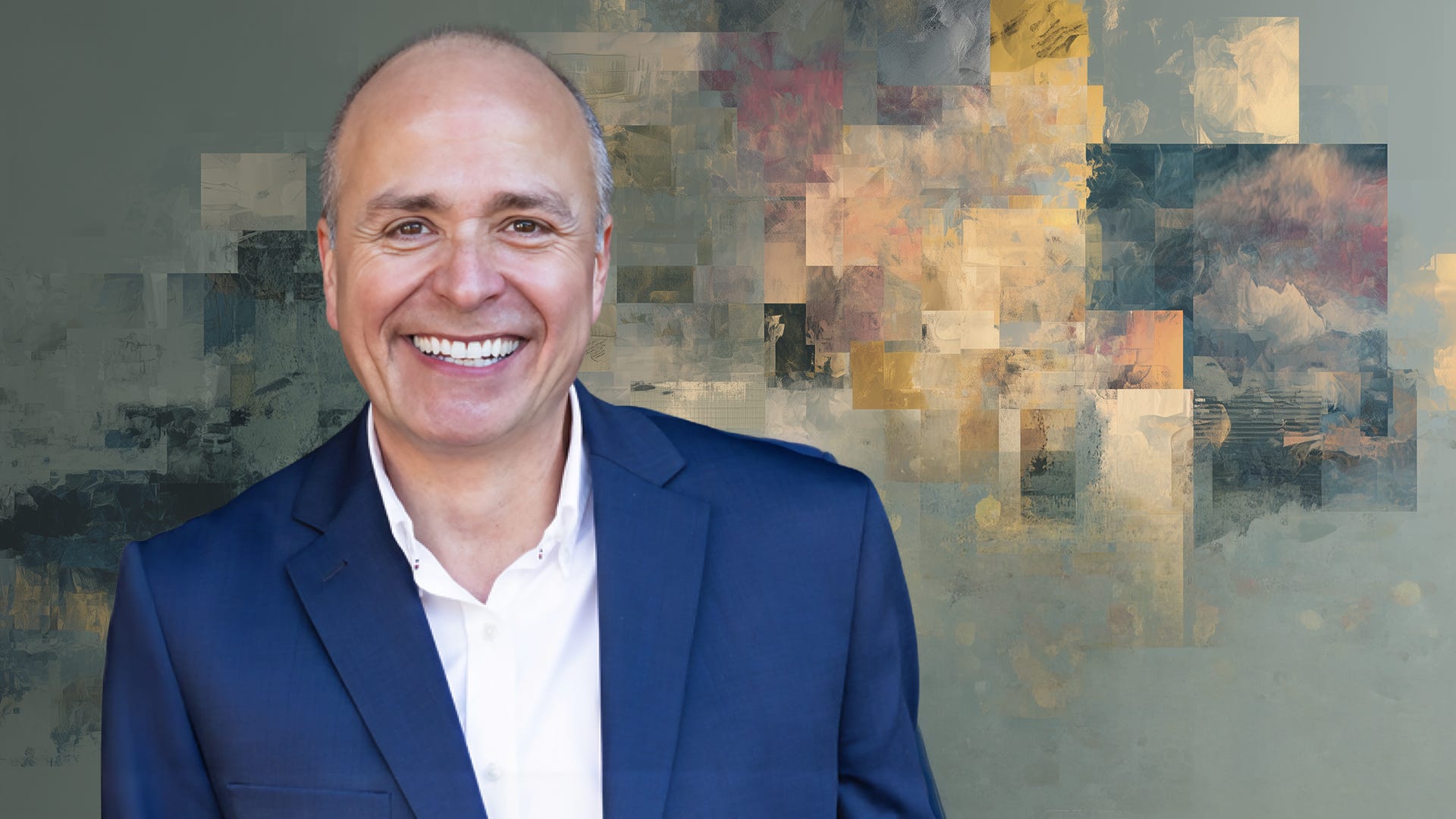
Jones Loflin is an author, keynote speaker, and executive coach whose work centers on leadership development, time management, work-life success, and the daily choices that shape professional and personal outcomes. Over nearly thirty years, he has worked with audiences and organizations looking to get clearer about where their energy is going and whether that energy is actually producing the results they want.
His latest book, Focused as a Bee, builds on a simple but useful contrast: most people know what it feels like to be busy, but far fewer know what it means to be truly focused. In our conversation, Jones used the metaphor of a three-ring circus — work, self, and relationships — to explain how easily people get trapped in one ring while neglecting the others. The point is not perfect balance. It is knowing where you need to be, when you need to be there, and what deserves your best attention in that moment.
What makes Jones’ perspective especially relevant now is that he does not treat productivity as a mechanical problem. This is not another conversation about inbox hacks or calendar tricks. It is about agency. The ability to stop, think, choose, and realign before the day fills itself for you.
The Work That Deserves Your Attention
Jones’ best ideas come back to a deceptively simple premise: focus is not a productivity hack. It is a choice. And most of the time, the better choice starts by admitting how much of the day is running on autopilot.
“Too often, we get automated with our schedules, with our activities, with the things we do in our day, and we don’t stop and ask ourselves, are these the activities that are going to contribute to the business success or team success that I really want?”
Actionable insight: Audit the recurring work before adding more of it. The standing meeting, the weekly report, the daily scramble — some of it may still matter, but some of it is probably just there because nobody has been brave enough to question it.
“You are the ringmaster of your circus. That doesn’t mean you’re in control of everything. But it does mean you are in control of certain parts of your day, your time, your energy.”
Actionable insight: Control is rarely total, but it is also rarely zero. Start by naming the parts of your day you actually can influence, then protect those like they matter. Because they do.
“It’s not about balance in your life. It’s about being in the right ring at the right moment.”
Actionable insight: Work-life balance gets messy because life is messy. A better measure may be presence. When it’s time to work, work. When it’s time to recover, recover. The leakage between the two is where a lot of energy quietly disappears.
“In your drive to get it all done, what’s not getting done or not getting done well?”
Actionable insight: This is the question that exposes the cost of busyness. If the strategic work, the health work, the relationship work, or the business development work is always the thing getting pushed, your calendar is telling on you.
“Some of your best ideas come up when you disconnect, when you’re exercising, when you’re taking a walk outside.”
Actionable insight: Thinking time is not wasted time, especially for leaders, founders, and creatives. Execution may happen at the desk, but the idea often shows up in the shower, on a walk, or during the ten quiet minutes you keep refusing to take..
“I think the challenge for many people is they want to be able to choose step fifteen when right now they need to choose step number two.”
Actionable insight: Big outcomes usually get blocked by small avoidance. Don’t wait until the whole path is visible. Send the rough draft, make the call, test the offer, ask the question. Step two has more answers in it than another week of overthinking.
“Every action that every bee takes is aligned toward the outcomes they want.”
Actionable insight: That is a brutal little standard for a workday. If the outcome matters, the actions should point toward it. If they don’t, the problem may not be effort. It may be alignment.
Choose the Work That Chooses Back
The point is not to abandon ambition or soften the edges of what it takes to build something meaningful. Business still rewards people who can execute, endure, and keep moving when the work gets hard. But there is a difference between discipline and drift. One is chosen. The other just happens to you.
That may be the real danger of busywork. It does not usually feel wasteful in the moment. It feels responsible. It feels productive. It feels like proof that you’re doing your part. But over time, the bill comes due. The strategy gets thinner. The relationships get quieter. The body keeps score. The bigger idea waits in the corner while you answer one more email.
The better path is not less work. It is more honest work. Work pointed at something. Work chosen with intention. Work that leaves enough room for thought, health, people, and the occasional quiet moment where the next right move finally has enough space to appear.
Thanks for reading.
—Ryan
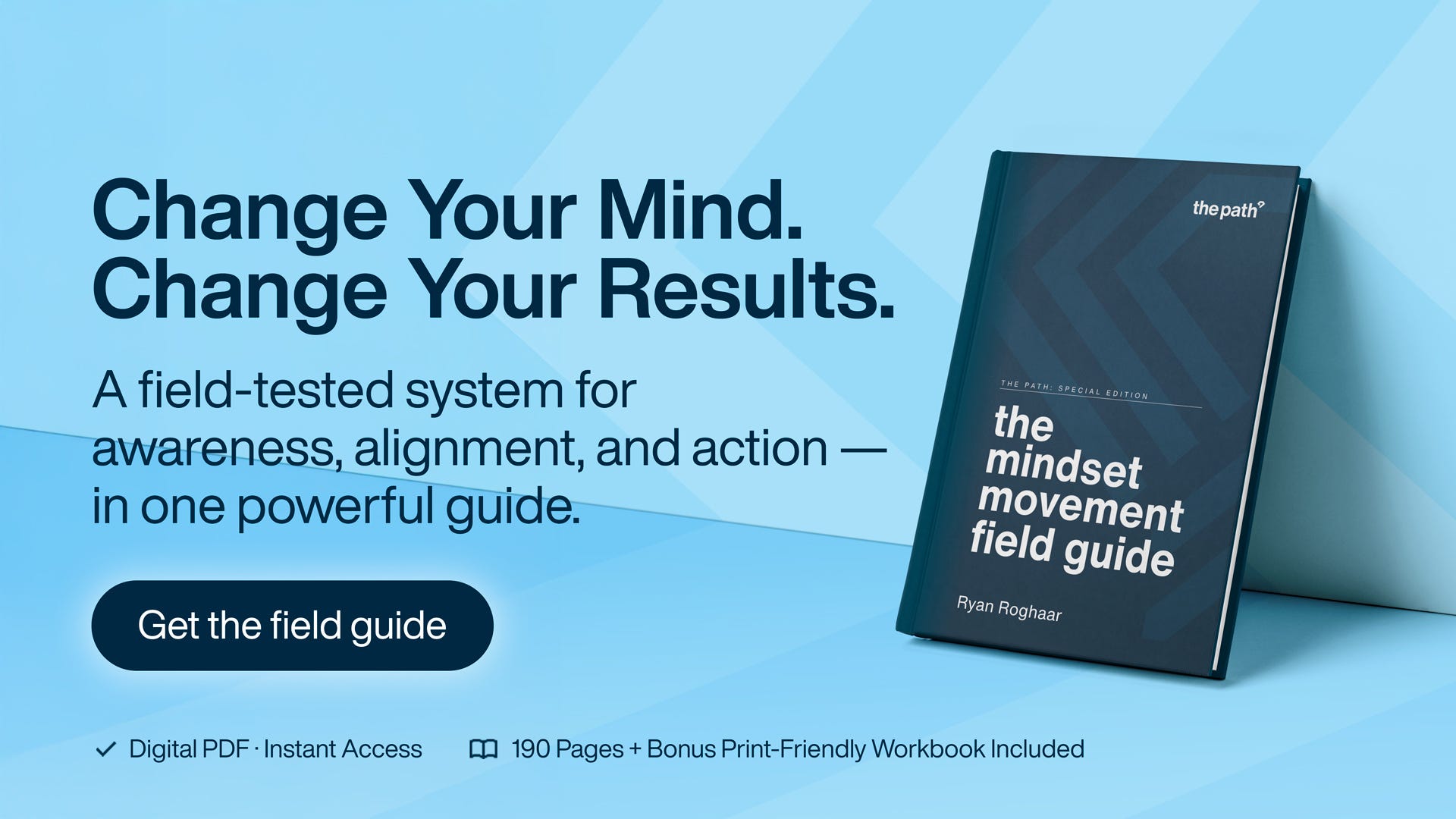
If you’re ready for life to feel more intentional, more aligned, and more within your control, this guide gives you the structure to make that shift real. Your next version starts with a single decision. Get the field guide
The Path is sponsored by: Taelor Style

A better way to dress for men on the go
Taelor is a subscription menswear service built for professionals and men on the go. Using AI and real stylists, Taelor curates outfits that fit your lifestyle—no shopping, no laundry, no decision fatigue. If you want to look sharp without spending mental energy on it, use code PATH at checkout for 25% off your first order.
Ready for more?
Catch Kate’s interview in its entirety on Eggs! The Podcast.
Don’t miss a show! Subscribe on Spotify, Apple Podcasts, or really anywhere great podcasts are found.
Path Picks
Cool stuff to help you forge your path to greatness.
Note: The Path Weekly is reader-supported. As such, I may be using affiliate links below. If you want to support the newsletter at no additional cost to you, please consider using the links below. If you’d rather not, most items below are widely available anywhere you want to shop. Thanks! –R
Reading list
If you're looking to go deeper on the themes from this week's newsletter, here are a few books that pair well with the conversation and offer a broader perspective:
Focused as a Bee — Jones Loflin and Sydney Loflin The natural companion to this week’s conversation. Loflin uses the structure and behavior of honeybees to explore focus, distraction, and the cost of spending our days on work that looks productive but does not actually move us where we want to go.
Juggling Elephants — Jones Loflin and Todd Musig A practical parable built around the three-ring circus metaphor Jones referenced in our conversation: work, self, and relationships. It’s a good read for anyone who feels like every part of life is competing for the same limited supply of attention.
A Minute to Think — Juliet Funt A strong argument for white space as a business advantage. Funt makes the case that constant activity is not the same as value, and that better thinking often starts when we stop filling every open minute with another task.
Essentialism — Greg McKeown A clean, useful book about the disciplined pursuit of less. Not less ambition. Less noise. Less accidental commitment. Less work that only exists because nobody stopped to ask whether it still mattered.
Building a Second Brain — Tiago Forte Jones referenced Forte’s CODE framework — collect, organize, distill, express — and it fits nicely here. This is a good pick for anyone who has too many ideas, too many inputs, and no reliable system for turning raw material into useful output.
Psycho-Cybernetics — Maxwell Maltz A classic on self-image, confidence, and the invisible walls we build in our own minds. A little old-school in places, but still valuable if you keep running into the same internal barrier right before the work gets real.
More to explore
Focused as a Bee — Get the Book
Jones’ newest book on focus, distractions, and making better use of your time and energy.Juggling Elephants — Get the Book
The book behind Jones’ three-ring circus framework for work, self, and relationships.Jones Loflin — Official Website
Learn more about Jones’ speaking, coaching, books, and resources.Jones Loflin on LinkedIn
Connect with Jones and follow his ongoing posts about focus, overload, leadership, and better choices with time.Jones Loflin on YouTube
Short videos and teaching clips from Jones on focus, work-life success, and leadership.
Would you like a personal introduction to this or any of the incredible leaders featured in The Path Weekly to explore business or other collaborative opportunities?
Contact me here to learn more about my B2B matchmaking service.
Want to put your brand in front of 13,000+ business and technology leaders each week? Contact me to learn more about sponsorship opportunities.
Work with me
RŌG Health - A commercial readiness and strategy firm for medtech companies, helping CEOs identify what’s blocking growth and make clear, de-risked decisions around commercialization, partnerships, and fundraising.
https://roghealth.com
Ryan Roghaar - Artist/Creative Director/Author
https://rogha.ar
Eggs! The Podcast - https://www.eggscast.com
Get featured
Do you want to be featured in a future edition of The Path Weekly?
Contact me to learn more.