




For a long time, leadership followed a fairly predictable script. You learned the job, proved yourself over the course of a few years, and eventually someone trusted you with more responsibility. A new title appeared on your business card, a few people reported to you, and only then were you expected to think like a leader. Until that moment, your job was execution. Direction belonged to someone else.
That arrangement made sense when organizations were built around hierarchy. Decisions traveled from the executive suite through layers of management before they reached the people doing the work. If you had an idea, there was usually a process for sharing it. If you saw a problem, there was probably someone above you who was responsible for solving it. Waiting your turn wasn’t a weakness. It was simply how work was organized.
It doesn’t feel that way anymore.
Most organizations have become flatter, faster, and far less patient. Managers oversee larger teams. Companies expect fewer people to accomplish more. Projects move before everyone feels ready, and the distance between identifying a problem and solving it has grown shorter than the distance between identifying a problem and asking for permission to solve it. In that kind of environment, initiative has become one of the most valuable professional skills a person can possess.
What’s striking is that initiative rarely announces itself. It looks remarkably ordinary. It’s the employee who notices the customer isn’t getting an answer and picks up the phone instead of forwarding another email. It’s the teammate who walks into a confusing meeting and leaves everyone with a clear next step. It’s the person who consistently follows through, who makes deadlines feel dependable instead of aspirational, who quietly becomes the colleague everyone hopes is assigned to the next project.
Those people often end up leading long before anyone gives them a leadership title.
I don’t think that’s because organizations have suddenly lowered their standards for leadership. Quite the opposite. They’ve simply become better at recognizing where leadership actually begins. It isn’t in authority. It isn’t in organizational charts. It starts much earlier, in the small decisions people make every day to reduce friction, solve problems, and make the people around them more effective. Promotions tend to recognize those habits—not create them.
Few people describe that shift better than Eggs! The Podcast guest, Greg Hoover. After spending decades leading organizations ranging from family-owned businesses to nearly billion-dollar enterprises, Hoover has become convinced that leadership isn’t something that’s granted. It’s something that’s practiced. His philosophy, which he calls Lead Anyway, is built around a simple premise: the people who create the greatest impact are rarely the ones waiting to be asked.
Leadership Is Built Long Before It’s Recognized

Greg Hoover has spent more than three decades in executive leadership, serving as a Chief Operating Officer, Chief Marketing Officer, President, and Chief Executive Officer across organizations ranging from a family-owned business to Atlas Van Lines, where he helped lead a company approaching $1 billion in annual revenue. Today, through his consulting firm, Third Star, he advises organizations on leadership development, organizational clarity, and building cultures that consistently execute at a high level.
What’s refreshing about Hoover’s perspective is that it isn’t built around executive theory or management jargon. It was forged by watching thousands of people succeed—or fail—in real organizations. Again and again, he found that the individuals who became indispensable weren’t always the most talented or the ones with the most impressive titles. They were the people who showed up consistently, communicated clearly, earned trust, and made the people around them better. Those observations eventually became the foundation of his book, Lead Anyway: Ordinary You, Extraordinary Impact, a practical argument that leadership is less about authority than it is about everyday decisions.
Our conversation explores why simplicity often beats complexity, why influence matters more than hierarchy, and why the strongest leaders are usually practicing leadership long before anyone officially calls them one. It’s a timely reminder that in today’s workplace, initiative is no longer a nice quality to have—it’s quickly becoming the price of admission.
Leadership Happens in the Small Moments
The biggest ideas in this conversation aren't about becoming a CEO or climbing an organizational chart. They're about the habits that quietly earn trust over time. Here are a few moments from my conversation with Greg that stood out—and the practical lessons they hold for anyone trying to make a greater impact.
“You don't get promoted by waiting for permission, waiting for a title, or waiting for somebody to anoint you as the guy in charge of the project.”
Actionable insight: If there's a problem you know how to solve, solve it. Leadership rarely begins with authority; it begins with someone deciding they're willing to own the outcome before anyone tells them to.
“Leadership becomes about how much we're all on the same page as opposed to having ten best players in the game.”
Actionable insight: Talent scales poorly without alignment. Before adding another person, another tool, or another meeting, ask whether everyone actually understands the mission. Clarity almost always outperforms complexity.
“If you see a fire, do you stand around and wait for the fire truck, or do you look for a hose?”
Actionable insight: Initiative doesn’t require permission. The most valuable people in any organization are the ones who instinctively move toward the problem instead of assuming someone else will handle it.
“Leadership is showing up in practice day after day and doing the repetitions. It's in the small things.”
Actionable insight: We tend to celebrate the visible moments—the promotion, the keynote, the championship—but careers are built in the ordinary moments nobody notices. Show up early. Keep your commitments. Repeat until people stop seeing it as effort and start seeing it as who you are.
“I'd rather that we execute fully and completely at 80% than spend all our time trying to grind out that last 15 or 20 and be perfect.”
Actionable insight: Perfection is often procrastination wearing nicer clothes. Ship the proposal. Make the call. Publish the idea. Momentum is almost always more valuable than polishing something that never leaves your desk.
“Be beyond reproach. Do the right things and don't worry about the rest of it. The rest will take care of itself.”
Actionable insight: Reputation is accumulated long before it's tested. When you're consistently dependable, ethical, and prepared, trust becomes your greatest professional advantage—and the opportunities tend to follow.
Don't Wait to Be Chosen
One of the biggest misconceptions in business is that leadership starts with a promotion. It doesn’t. Promotions simply make visible what has often been true for months—or years. By the time someone is entrusted with greater responsibility, they’ve usually spent a long time demonstrating that they can be trusted with smaller ones. They’ve built a reputation for showing up, following through, and making life easier for the people around them. That’s rarely glamorous work, but it’s almost always the work that matters most.
There’s something freeing about that realization. It means you don’t have to wait for the next title, the next opportunity, or the next stage of your career before deciding what kind of leader you want to become. Every meeting, every client conversation, every difficult project offers another chance to build trust or erode it. The cumulative effect of those seemingly ordinary moments is what shapes a career far more than any single breakthrough ever will.
The permissionless workplace isn’t asking us to become louder, busier, or more visible. It’s asking us to become more dependable. To raise our hand before we’re asked. To bring clarity where there’s confusion. To quietly make the people around us better. Those aren’t just leadership traits—they’re the habits that earn the opportunity to lead in the first place.
Thanks for reading.
—Ryan
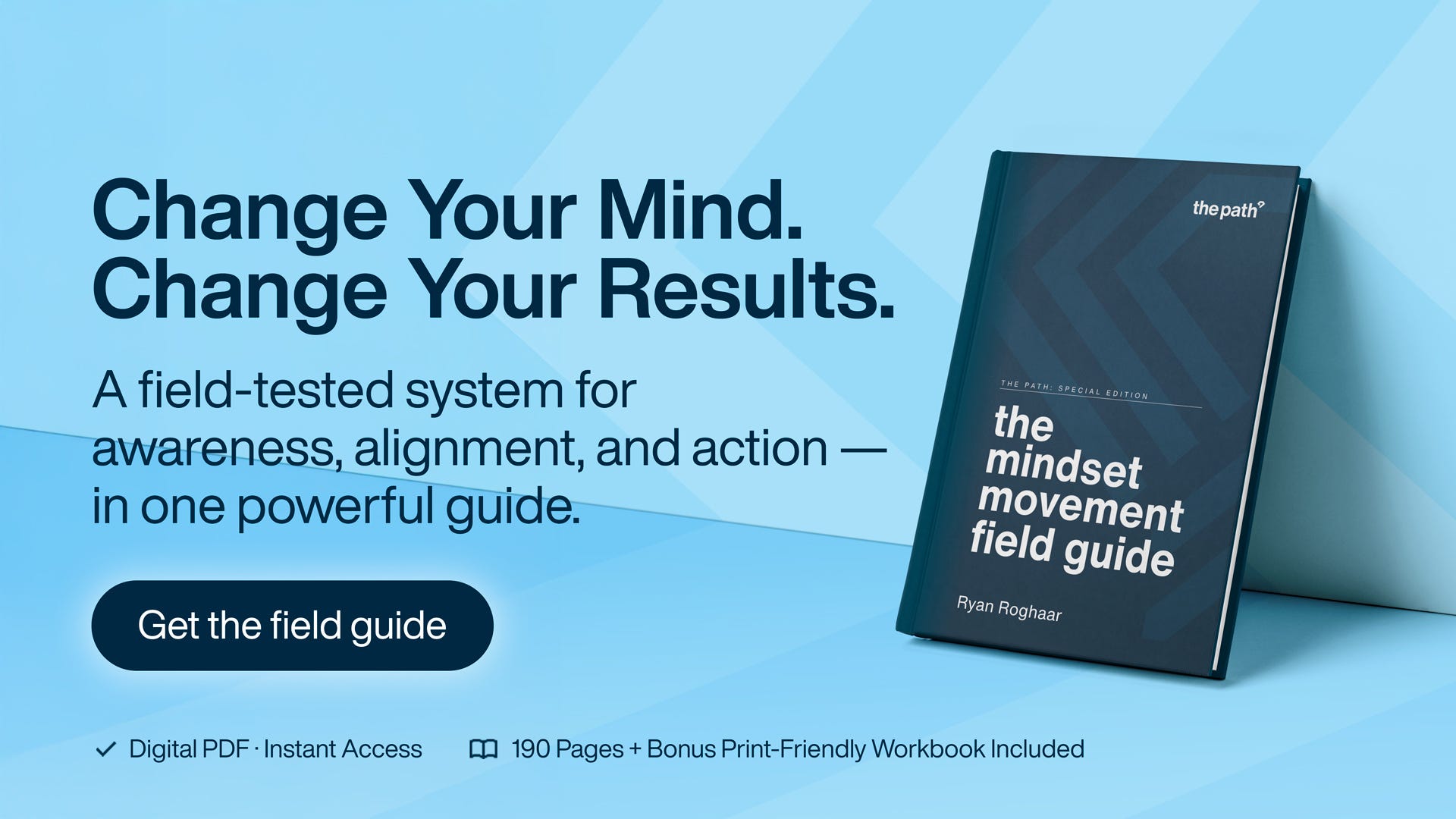
If you’re ready for life to feel more intentional, more aligned, and more within your control, this guide gives you the structure to make that shift real. Your next version starts with a single decision. Get the field guide
Ready for more?
Catch Kate’s interview in its entirety on Eggs! The Podcast.
Don’t miss a show! Subscribe on Spotify, Apple Podcasts, or really anywhere great podcasts are found.
Path Picks
Cool stuff to help you forge your path to greatness.
Note: The Path Weekly is reader-supported. As such, I may be using affiliate links below. If you want to support the newsletter at no additional cost to you, please consider using the links below. If you’d rather not, most items below are widely available anywhere you want to shop. Thanks! –R
Reading list
If you're looking to go deeper on the themes from this week's newsletter, here are a few books that pair well with the conversation and offer a broader perspective:
Naturally, this week’s conversation begins here. Hoover makes the case that leadership isn’t reserved for executives or managers. It’s a daily choice to bring energy, clarity, and accountability to whatever role you’re in. Practical, approachable, and full of lessons that apply whether you’re leading a company or simply trying to become someone others can depend on.
One of the shortest—and most impactful—leadership books I’ve ever read. Lencioni asks a deceptively simple question: Why do you want to lead? If the answer is status instead of responsibility, you’re likely chasing the wrong prize. A great companion to Greg’s philosophy that leadership begins long before the title arrives.
Turn the Ship Around! — L. David Marquet
Marquet transformed one of the worst-performing submarines in the U.S. Navy by abandoning the traditional command-and-control model in favor of distributed leadership. Rather than waiting for orders, every sailor was expected to think, contribute, and take ownership. It’s one of the best real-world examples of what a permissionless workplace can look like.
Greg Hoover returns repeatedly to the power of simplicity. McKeown explores the same principle from a different perspective: the disciplined pursuit of what matters most. If your calendar, inbox, or project list constantly feels overwhelming, this book offers a compelling argument that doing less—better—is often the fastest path forward.
The Score Takes Care of Itself — Bill Walsh
Walsh built one of the greatest dynasties in NFL history, but his philosophy wasn’t centered on winning. It was centered on mastering the process. Focus relentlessly on standards, preparation, and execution, and the results eventually take care of themselves. That mindset echoes throughout this week’s conversation with Greg.
More to explore
If you’d like to dive deeper into Greg Hoover’s work, here are a few great places to start:
Would you like a personal introduction to this or any of the incredible leaders featured in The Path Weekly to explore business or other collaborative opportunities?
Contact me here to learn more about my B2B matchmaking service.
Want to put your brand in front of 13,000+ business and technology leaders each week? Contact me to learn more about sponsorship opportunities.
Work with me
RŌG Health - A commercial readiness and strategy firm for medtech companies, helping CEOs identify what’s blocking growth and make clear, de-risked decisions around commercialization, partnerships, and fundraising.
https://roghealth.com
Ryan Roghaar - Artist/Creative Director/Author
https://rogha.ar
Eggs! The Podcast - https://www.eggscast.com
Get featured
Do you want to be featured in a future edition of The Path Weekly?
Contact me to learn more.