




For the last decade or so, a lot of business strategy has been built around the idea of removing people from the process. We automated the follow-up. We optimized the funnel. We bought the ads, studied the dashboards, built the landing pages, hired the influencers, tested the headlines, chased the algorithm, and celebrated every point of friction we could eliminate between a customer wanting something and a company taking their money. Some of that was useful. A lot of it still is. But somewhere along the way, the tool started getting mistaken for the relationship.
That was always the danger. Digital marketing gave businesses reach they never had before, and reach is intoxicating. It makes the world feel bigger and more available. It lets a small brand find customers three states away, or three countries away, before lunch. But reach is not the same thing as trust. Visibility is not the same thing as credibility. A customer clicking “buy now” is not always the same as a customer believing in what they bought, who they bought it from, and why it should matter beyond the transaction.
Commerce was human long before it was digital. That sounds obvious, but business has a way of forgetting obvious things when a new platform shows up with a dashboard and a growth curve. For most of history, buying something meant dealing with another person. A shopkeeper. A maker. A neighbor. A salesperson who had to look you in the eye and stand behind the thing they were selling. Reputation had weight because it lived in the real world. If the product was bad, if the promise was thin, if the experience felt cheap or dishonest, there was nowhere to hide. You had to face the customer again.
The internet didn’t erase that truth. It just made it easier to ignore for a while. We could dress up weak products with strong branding. We could inflate mediocre ideas with paid attention. We could throw a few affiliate codes at an influencer campaign and pretend that enthusiasm had been earned. We could push customers into automated service loops and call it efficiency. And for a while, a lot of it worked well enough to keep everyone moving. But people eventually develop a feel for thinness. They know when the review sounds bought. They know when the “community” is really just a retargeting list. They know when a company has optimized everything except the part where it actually has to be good.
That’s why the movement back toward human-centered commerce feels less like nostalgia and more like a correction. It’s not about pretending Amazon doesn’t exist, or that ads don’t work, or that automation is somehow immoral. That would be silly. The issue is proportion. Tools should extend trust, not replace it. Marketing should help a good product find the right people, not create a fog machine around something forgettable. Growth should widen the circle without hollowing out the center. When businesses get that backward, they may still sell, but they lose the thing that makes people come back, talk about it, defend it, and feel good being associated with it.
The brands that understand this tend to have a different relationship with scale. They are not allergic to growth, but they are careful about what growth asks them to trade away. They know the channel matters. They know the buying experience matters. They know that a little friction can be useful if it creates intention, confidence, or discovery. A customer walking into a trusted local shop and being told, “Yes, I’ve tried this, and it works,” is a very different kind of conversion than a customer being chased around the internet by an ad for something they barely remember clicking on. One is attention. The other is trust.
That distinction sits at the heart of my conversation on EGGS! The Podcast with Kate Assaraf, founder and CEO of Dip Sustainable Hair Care. Kate built Dip around a product that had to be excellent before its mission could matter, then grew the company through independent retailers, refill shops, salons, surf shops, and word of mouth rather than the usual race toward Amazon and big-box scale. Her story is not a rejection of modern commerce. It’s a reminder that the human layer was always the anchor. We drifted away from it because the new tools were shiny, fast, and measurable. Now the smarter brands are starting to remember what the best ones never forgot.
Where Trust Lives On

Kate Assaraf is the founder and CEO of Dip Sustainable Hair Care, a plastic-free hair and personal care brand built for people who have grown tired of sustainability products that ask too much and deliver too little. After more than 20 years in the beauty industry, Kate saw the same problem from both sides: consumers wanted to make better choices, but too many “better” products were underperforming, over-marketed, or built more around the sustainability claim than the actual customer experience.
Dip was her answer to that gap. Rather than reverse-engineering a product to hit a convenient price point, Kate worked with a chemist experienced in salon-quality hair care and started with a different question: What would the best version of this product be if the price point wasn’t the first constraint? That approach led to oversized, long-lasting shampoo and conditioner bars designed to work well enough that the plastic-free part almost became secondary.
What makes Kate’s story especially interesting is not just the product, but the path she chose to grow it. Dip has largely avoided the default modern playbook — Amazon, big-box retail, fake influencer hype, and endless ad spend — in favor of independent refill stores, salons, surf shops, real customer relationships, and word of mouth. In doing so, Kate has built more than a sustainable hair care company. She has built a case study in what happens when a brand protects the human relationship at the center of the transaction.
The Work Beneath the Word of Mouth
Kate’s approach works because it is not built around a single tactic. It is a set of choices that all point in the same direction: better product, better context, better relationships, and a refusal to confuse attention with trust.
“People were leaving sustainability and just returning back to their plastic-clad items. My goal with Dip was to make something so good that the plastic-free part of it didn’t even matter.”
Actionable insight: A mission can open the door, but the product still has to earn its place in someone’s life. If the thing itself does not work, the values story eventually becomes a burden instead of an advantage.
“Big part of the story is that this is really good. It’s made with great ingredients, it’ll last you a long time, and it’ll save you money.”
Actionable insight: The strongest positioning is often simpler than we make it. Before dressing a brand in purpose, personality, or cultural relevance, make sure the basic customer argument is clear: it works, it lasts, and it makes sense.
“I was like, let’s make the best bar ever, regardless of what the price is going to be. I didn’t start by building backwards and subtracting all the bells and whistles until we could meet a marketing price point.”
Actionable insight: Price matters, but building only toward a price point can quietly strip the product of the very thing that would have made people care. Sometimes the better question is not “How cheap can we make this?” but “How good does this need to be for people to talk about it without being asked?”
“I made the value for the consumer, not for me. And I was banking on the consumer being so excited about it that they would tell others.”
Actionable insight: Word of mouth is not a campaign. It is the result of a customer feeling like they got more than they expected. That does not happen by accident, and it rarely happens when every decision is made to protect the seller’s margin first.
“I call it like refill stores are the new record store. If you remember back in the day when you wanted to find something cool in music, you would go to the record store and talk to the person behind the counter. It’s like that in sustainability now.”
Actionable insight: Discovery still has a human shape. The best retailers do more than stock shelves; they transfer confidence. They help customers make sense of choices in a market that is crowded, loud, and increasingly hard to trust.
“I’m not anti-corporation, but the moment I put Dip on Amazon, people will flock to Amazon to buy it and not to the refill stores, where I know sustainability matters the most.”
Actionable insight: Distribution is not neutral. Where a product is sold changes the relationship around it, the expectations attached to it, and the ecosystem it supports. More access is not always better if it weakens the channel that made the brand meaningful in the first place.
“Growth was a by-product. It wasn’t the goal. My goal was to support as many refill stores, independent salons, and surf shops as possible.”
Actionable insight: Growth without a center tends to become appetite. Growth with a point of view has boundaries, and those boundaries can become part of the brand’s strength. The question is not simply how big the company can get, but what has to remain intact as it grows.
The Human Part Was Never Optional
There is nothing wrong with scale. There is nothing wrong with using the tools available to reach more people, sell more products, or make a company more efficient. But scale has a way of testing what a business actually believes. If the product gets thinner, the customer gets farther away, the channel gets weaker, and the relationship becomes less important than the transaction, the company may still grow — but it grows by loosening its grip on the thing that made it worth caring about in the first place.
That is what makes Kate’s story useful. Dip is not a museum piece or a protest against modern business. It is a functioning, growing company built around an older truth: people still want to buy good things from people they trust. The platforms will keep changing. The tools will keep getting faster. The dashboards will keep promising cleaner answers than real life can usually provide. But the anchor is still human. It always was.
Thanks for reading.
—Ryan
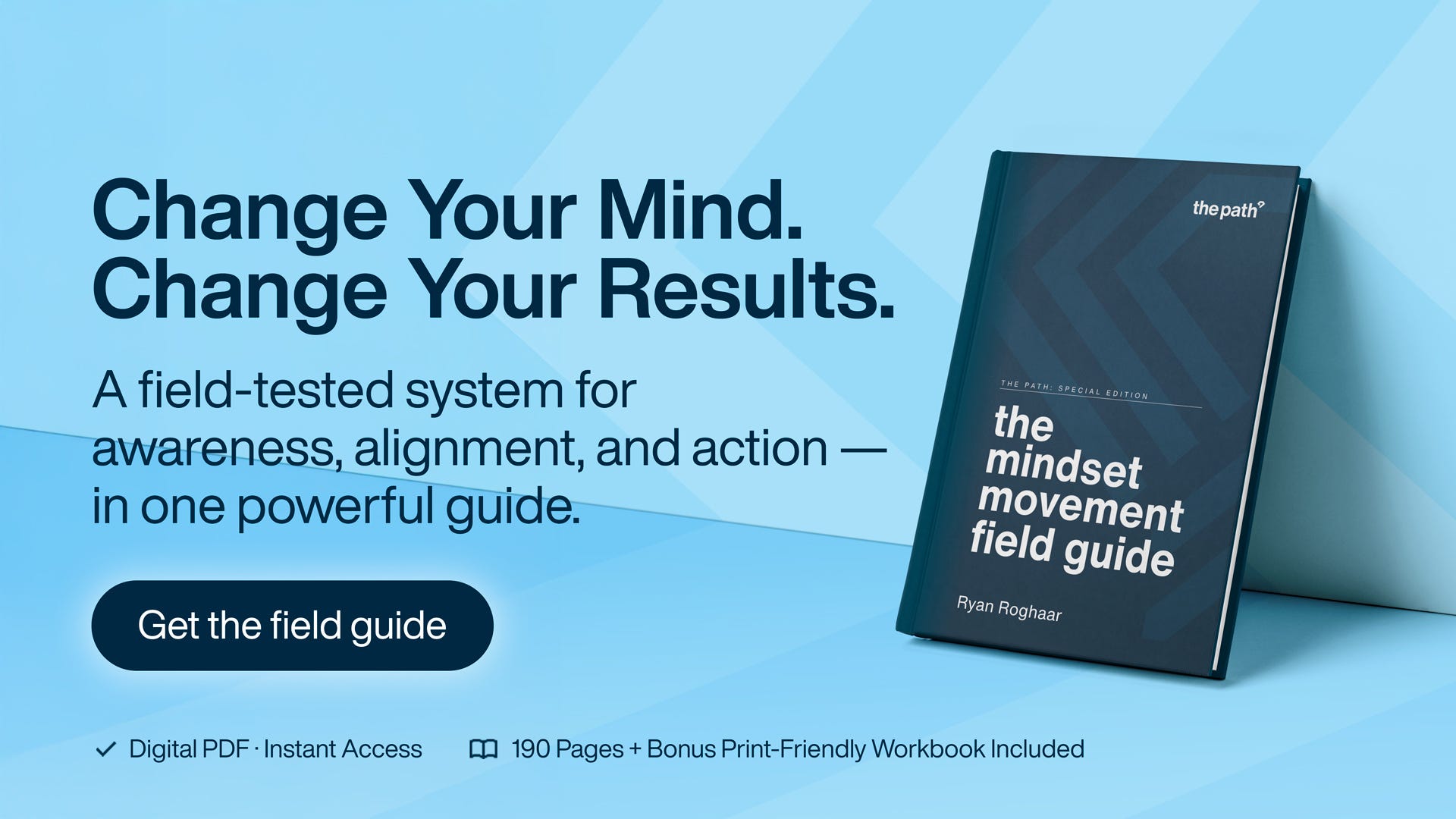
If you’re ready for life to feel more intentional, more aligned, and more within your control, this guide gives you the structure to make that shift real. Your next version starts with a single decision. Get the field guide
The Path is sponsored by: Taelor Style

A better way to dress for men on the go
Taelor is a subscription menswear service built for professionals and men on the go. Using AI and real stylists, Taelor curates outfits that fit your lifestyle—no shopping, no laundry, no decision fatigue. If you want to look sharp without spending mental energy on it, use code PATH at checkout for 25% off your first order.
Ready for more?
Catch Kate’s interview in its entirety on Eggs! The Podcast.
Don’t miss a show! Subscribe on Spotify, Apple Podcasts, or really anywhere great podcasts are found.
Path Picks
Cool stuff to help you forge your path to greatness.
Note: The Path Weekly is reader-supported. As such, I may be using affiliate links below. If you want to support the newsletter at no additional cost to you, please consider using the links below. If you’d rather not, most items below are widely available anywhere you want to shop. Thanks! –R
Reading list
If you're looking to go deeper on the themes from this week's newsletter, here are a few books that pair well with the conversation and offer a broader perspective:
Small Giants — Bo Burlingham This is probably the cleanest companion to this week’s conversation. Burlingham looks at companies that chose to be great instead of simply chasing size, which makes it a natural fit for a founder story built around independent retail, intentional growth, and knowing what not to trade away.
The Human Brand — Chris Malone and Susan T. Fiske A smart look at why people relate to companies in deeply human terms. The book’s core idea — that customers judge brands through signals of warmth and competence — lines up nicely with the larger argument here: trust is not an accessory to commerce. It is the thing commerce runs on.
Let My People Go Surfing — Yvon Chouinard Chouinard’s Patagonia story is still one of the best examples of building a real company around values without letting the values become empty marketing. It pairs especially well with Dip’s “buy better, buy less, shop small” philosophy.
The Experience Economy — B. Joseph Pine II and James H. Gilmore A classic for thinking about the difference between a transaction and an experience. That distinction matters here because a customer buying from a trusted local shop is not having the same experience as someone clicking “buy now” from the cheapest listing in a feed.
The Thank You Economy — Gary Vaynerchuk This one is a little older now, but the central idea has aged well: businesses win when they remember that customer relationships are not abstract. Listening, responding, being honest, and making people feel seen still matter, even when the channels change.
More to explore
Dip Sustainable Hair Care — Kate Assaraf’s plastic-free hair and personal care brand, built around performance first and sustainability as something more durable than a marketing angle.
Find Dip near you — Use Dip’s store locator to find independent refill stores, salons, surf shops, and boutiques carrying the brand.
Why Refill Is the New Record Store — Dip’s own piece on why refill stores matter as places of discovery, community, and human-to-human trust.
Small Thinking — A deeper look at Dip’s point of view on shopping small, building differently, and resisting the pressure to flatten everything into scale.
Kate Assaraf on LinkedIn — Follow Kate’s thinking on ethical entrepreneurship, sustainability, and building a brand outside the usual beauty-industry playbook.
Dip on Instagram — Product updates, brand personality, and a good look at how Dip shows up visually.
Dip on TikTok — More from the Dip world, including product education and behind-the-scenes brand content.
Would you like a personal introduction to this or any of the incredible leaders featured in The Path Weekly to explore business or other collaborative opportunities?
Contact me here to learn more about my B2B matchmaking service.
Want to put your brand in front of 13,000+ business and technology leaders each week? Contact me to learn more about sponsorship opportunities.
Work with me
RŌG Health - A commercial readiness and strategy firm for medtech companies, helping CEOs identify what’s blocking growth and make clear, de-risked decisions around commercialization, partnerships, and fundraising.
https://roghealth.com
Ryan Roghaar - Artist/Creative Director/Author
https://rogha.ar
Eggs! The Podcast - https://www.eggscast.com
Get featured
Do you want to be featured in a future edition of The Path Weekly?
Contact me to learn more.