



Thanksgiving comes with a ritual most of us go along with and few of us take very seriously. Somebody at the table asks everyone to say what they’re thankful for, people mention family and health and the food, and then we get back to the turkey. It’s a nice moment. For a lot of business owners, it’s also the only time all year they’ll say out loud that something is going well.
That’s worth sitting with, because most founders I know keep a remarkably detailed record of what’s wrong. We know which client is drifting, which number missed, which launch landed with a thud and which hire didn’t work out. We can recite our shortfalls on demand, usually in order of severity. Ask the same person what got better this year and you’ll often get a pause, a shrug and a change of subject.
I’d call that bad bookkeeping. A ledger that only records debits isn’t humble or rigorous. It’s just wrong, and decisions made from wrong books tend to be wrong too. A founder who can’t see the progress already made is more likely to abandon a strategy right before it pays off, underprice the thing they’re genuinely good at, or keep chasing a version of success that never arrives because nothing ever gets counted as success.
Part of the problem is structural. When you work for yourself, nobody hands you a promotion. There’s no move from junior designer to senior designer, no annual review telling you the last two years added up to something. You can get meaningfully better at your craft for a decade and never hear it from anyone. Without that outside signal, the only scorekeeper is the voice in your own head, and that voice is rarely a generous accountant.
So the gratitude I’m interested in this week isn’t the greeting-card kind. It’s closer to an audit: an honest accounting of what’s working, kept with the same discipline we already bring to what isn’t. It happens to feel good, but that’s not really the point. A complete set of books is the only kind you can make good decisions from.
My recent conversation on Eggs! The Podcast with Marc Anthony Longwith made this case more bluntly than I could. Marc advises founders for a living, and a surprising amount of his work starts in a place most business coaching skips entirely: getting people to notice the wins they keep walking past.
The Coach Who Starts With the Small Wins
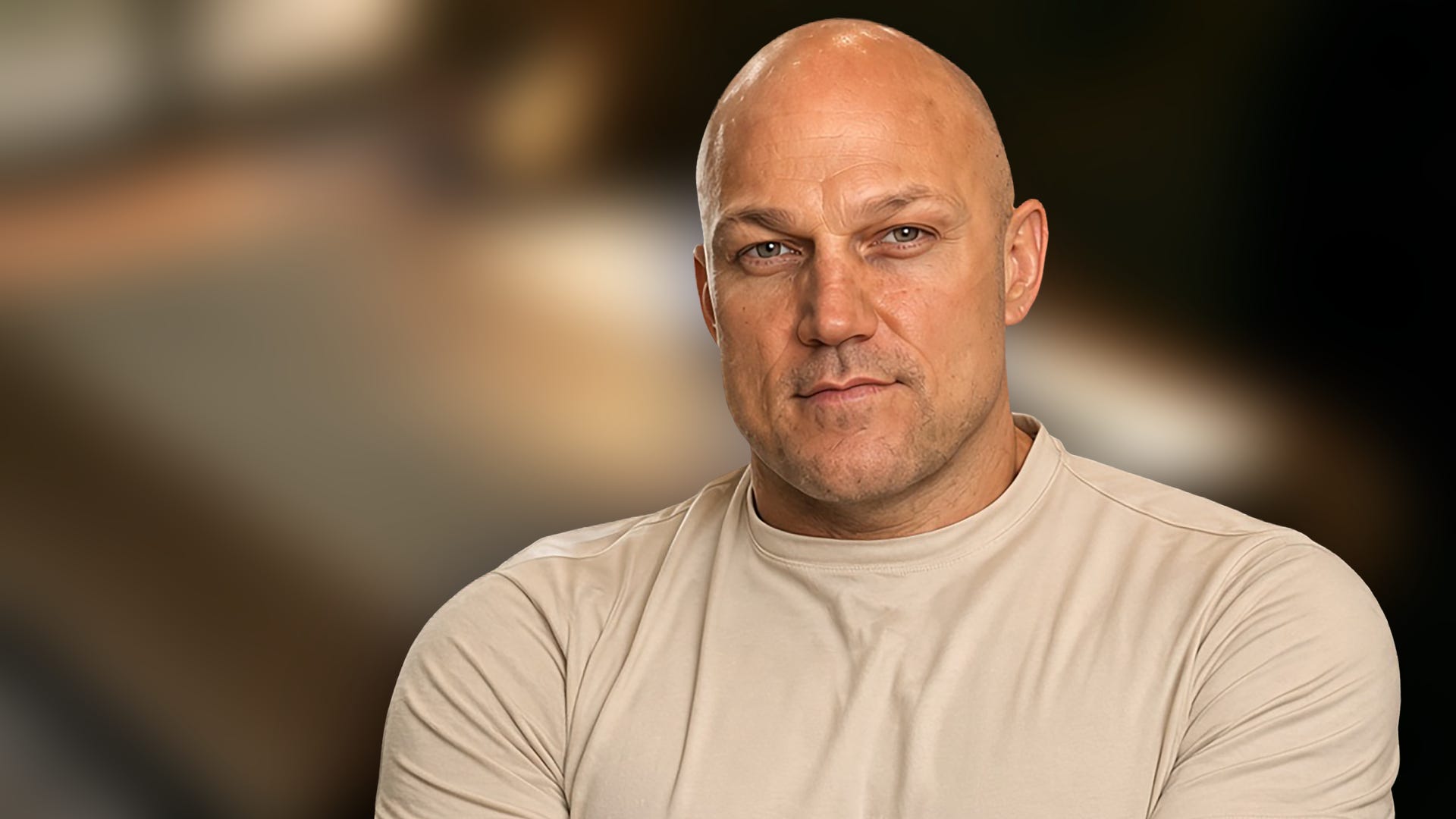
Marc Anthony Longwith came up the hard way. He grew up in Las Vegas in what he describes as a chaotic household, found boxing at around twelve, and went on to fight professional MMA in the early 2000s. At the same time, he was working his way up through Las Vegas food and beverage, from polishing glasses to helping open properties like Bellagio and Wynn, and later opening a brewpub downtown.
From there, he moved into coaching, first Michelin-star chefs leaving corporate kitchens to start their own businesses, then athletes, then a company that taught holistic practitioners to build online businesses. Today he runs Evolved Entrepreneur, a private advisory practice for founders and executives navigating a pivot, a scale, or an exit, and he hosts the Evolved Entrepreneur Podcast. He’s also writing a book called Capacity. What makes him useful on this topic is that he isn’t selling positivity. His starting point is that founders can’t execute well on a picture of themselves that’s only half accurate.
Keeping Both Sides of the Books
Marc’s argument isn’t that founders should feel better about themselves. It’s that they should see themselves accurately, and that accuracy takes deliberate practice.
Small wins are a skill, not a consolation prize.
“If you do not celebrate the micro wins, you will not have created the muscle to see the contrast of the bigger things. And thus you will never be fulfilled.”
Marc admits this can sound almost silly. Nobody needs a parade for answering their email. But his point is about training attention. A founder who never registers a small win won’t register a big one either; they’ll just move the goalpost. He described working with a client worth $1.2 billion who was still scared to death of going broke. More money hadn’t fixed the scorekeeping.
The practical implication: Pick a fixed moment each week, Friday afternoon works, and write down what actually moved, however small. Do it before you make the list of what didn’t.
An honest self-assessment has two columns.
“You should equally be able to be honest to yourself about all the things you need to improve, but also about all the things that you’re good at. And if you’re not, you don’t have a clear picture.”
Most of us treat self-criticism as rigor and self-recognition as vanity. Marc calls the one-sided version what it is, a distortion, and he’s firm that the other side can be trained like any other skill. If you only ever audit the weaknesses, you’re running the business on half the information.
The practical implication: The next time you review a quarter, a project or a pitch, write the strengths with the same specificity as the problems. “We’re good with clients” doesn’t count. “We kept every client we started the year with” does.
Other people’s thanks is data.
“I’ve been around some of the most successful people and they’re like, Thank you so much. You helped me so much. You’re like, Me? […] And when you start to see that, you start to see your own value and you really believe in yourself.”
I had my own version of this when I moved into medtech. Early on I was in rooms with surgeons and researchers and told myself I had no business being there. It took a while to notice that many of them needed help telling the story of their own products, and that this was something I could actually do. Marc’s point is that the people you help usually see that value before you do. It’s worth listening when they tell you.
The practical implication: Keep the thank-you notes. Save the emails and messages where a client or colleague tells you what your work did for them, and reread them when the internal scorekeeper gets loud. It’s evidence from outside your own head.
Closing Out the Year
Most of us will do some version of a year-end review in the next few weeks: revenue, pipeline, what to fix in January. Worth doing. But add the other column while you’re at it. What you learned to do this year that you couldn’t do last year. Which clients stayed. Which bets paid off, even a little. Who thanked you, and for what.
Near the end of our conversation I described myself as fairly risk averse. Marc didn’t let it stand. I’ve been an entrepreneur since I started working, he pointed out, so how risk averse could I really be? He was right. The story I’d been telling about myself was simply out of date, and the evidence against it had been sitting in my own record the whole time.
That may be the most useful thing a full set of books does. It doesn’t just make you feel better about the year. It shows you which of the stories you tell about yourself have quietly stopped being true. Some of them are probably holding you back, and the only way to find them is to count.
Thanks for reading.
—Ryan
The Path Question
What’s one win from this year that you never stopped to count?
I’d love to hear your answer. Reply directly to this email or leave a comment, and tell me what it was and what changed once you noticed it.
With permission, I may share selected reader perspectives in a future issue.
The Lid - Out Now

My new book, The Lid: The Invisible Barrier Between Here and What’s Next, is out now!
It expands on the four essays I published in The Path this spring, drawing on research, professional experience, and years of conversations with people who’ve built businesses, careers, and creative lives.
I’ve also made the opening chapter and two companion tools—the Lid Audit and Barrier Map—available free at the book’s website.
Explore the book and get the free resources: thelidbook.com
"Ryan has finally written the book we’ve all been waiting for. The Lid is a masterpiece in explaining what holds people back in life and how to claim victory over it. It makes a complex problem very understandable." — David Neagle, author of The Millions Within
Paperback and Kindle editions are available now! If you’d rather read some of it first, the opening chapter is free at thelidbook.com.
Path Picks
Cool stuff to help you forge your path to greatness.
The Big Leap by Gay Hendricks
Marc mentioned this one in our conversation, and it pairs well with this week’s theme. Hendricks names the “Upper Limit Problem,” the habit of pulling ourselves back down just as things start going well. If you suspect you’re better at spotting what’s wrong than letting yourself register what’s right, this book gives that pattern a name.
Listen In / More to Explore
Eggs! The Podcast
You Are the Ceiling of Your Own Company with Marc Anthony Longwith
Listen to my full conversation with Marc about capacity versus information, why he thinks courage matters more than confidence, and how outside perspective finds the walls you can’t see on your own.
More on Marc: Evolved Entrepreneur
Work with me
RŌG Health - A commercial readiness and strategy firm for medtech companies, helping CEOs identify what’s blocking growth and make clear, de-risked decisions around commercialization, partnerships, and fundraising.
https://roghealth.com
Ryan Roghaar - Artist/Creative Director/Author
Media Kit - Book me, get featured, all my links in one place
Eggs! The Podcast - https://www.eggscast.com
***The Lid - My new book - Out Now***
Would you like a personal introduction to any of the incredible leaders featured in The Path Weekly to explore business or other collaborative opportunities? Contact me here to learn more about my B2B matchmaking service.
Do you want to be featured in a future edition of The Path Weekly?
Contact me to learn more.