



There was a time when being able to produce something exceptional was enough to distinguish a business. If you could design a beautiful identity, build a sophisticated website, write compelling copy, or solve a complicated technical problem, you had something relatively few people could offer. The work itself was evidence of your value. Customers could see the difference between someone who knew what they were doing and someone who didn’t, and that difference gave skilled people a meaningful advantage.
That distinction is getting considerably harder to make.
Generative AI has made an enormous amount of previously specialized work accessible to people who never developed the underlying skills. A founder can generate a visual identity over lunch. A small business can produce a month’s worth of marketing content in an afternoon. Someone with a good idea and very little technical knowledge can build a functioning website without writing much, if any, code. I’ve experienced some of that acceleration myself, and I think it’s extraordinary. But there’s an uncomfortable business question hiding inside all this newfound capability: When everyone can produce something that looks professional, what makes anyone worth paying a premium for?
I don’t think the answer is simply better work. Certainly, exceptional quality will continue to matter, but quality becomes a more complicated selling proposition when the average customer has access to tools capable of producing something that looks good enough. In many situations, the customer isn’t qualified to distinguish between a technically excellent result and a convincing imitation anyway. They’re trying to solve a problem, and if two solutions appear comparable, the decision increasingly depends on something outside the deliverable itself. For me, that something is reputation.
I spent more than two decades building and running a creative agency, and one of the things that became increasingly apparent was how much business moved through relationships. Clients didn’t always arrive because they had conducted an exhaustive comparison of our work against every other agency in the market. They arrived because somebody knew us, had worked with us, trusted us, or had heard something that made them comfortable taking the next step. The portfolio mattered, I guess. But the reputation surrounding the portfolio often determined whether we got the opportunity to show it.
I think this distinction becomes more consequential as technology makes production less expensive. A business can purchase capability, automate processes, and accelerate output. What it cannot do quite so easily is manufacture a history of consistently making good decisions, keeping commitments, solving difficult problems, and treating people well. Those things require time, experience, and other people willing to testify that you actually do what you claim.
My recent conversation on Eggs! The Podcast with British designer and author James Martin brought this into focus. James has spent years building a recognizable presence in the design community, but his thinking about branding is considerably more useful than another discussion about logos or visual identity. He sees reputation as something built through observable behavior, and I think that perspective has implications for just about anybody trying to build a durable business.
The Designer Behind the Reputation
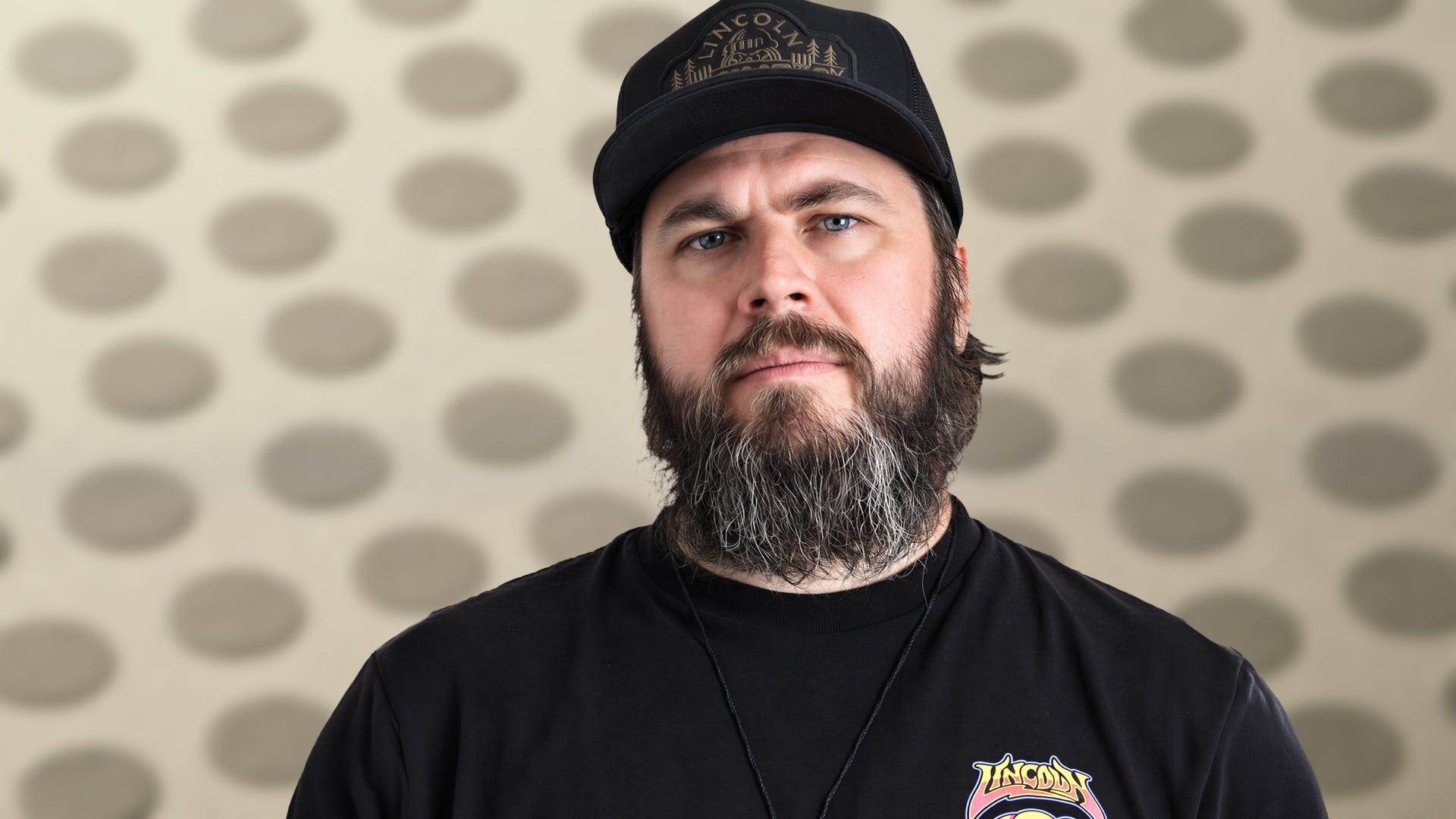
James Martin, better known as Made By James, is a British designer, author, and educator whose work has earned him a substantial following among creative professionals. His career spans more than two decades, and his experience includes work and partnerships involving recognizable international brands. He also serves on Canva’s Design Advisory Board and has worked with Lincoln Design Co. and Affinity.
His books, Made by James and No Bullsht Branding*, explore the relationship between creative practice, professional identity, and building a business people recognize and trust.
What makes James particularly interesting in this conversation is that he isn’t defending the old creative economy simply because it worked for him. He’s willing to question whether some of the things designers have historically valued, including taste and technical skill, will remain sufficient as technology changes. His argument ultimately comes back to the behaviors that make someone memorable, credible, and worth working with.
Things That Make a Reputation Worth Something
James offered a useful way of looking at the relationship between creativity, business, and trust. Three observations in particular deserve consideration.
Good judgment only matters when you’re willing to act on it.
“I believe in conviction under uncertainty. That’s the one thing that I pin business on.”
James makes an important distinction between having good taste and being willing to bet on it. It’s relatively easy to recognize a promising idea once everybody else agrees that it’s promising. The real opportunity often belongs to the person willing to make a decision before the consensus arrives.
For business owners, that might mean pursuing an underserved market, taking a creative direction a client hasn’t considered, or investing in an opportunity that doesn’t yet have an obvious precedent.
The practical implication: Don’t confuse your ability to recognize quality with your willingness to create it. Consider where you’re waiting for external validation before making a decision you already have good reasons to believe in. Reputation is built partly through the judgment people see you exercise, especially when the outcome isn’t guaranteed.
The things you choose to keep human become part of your value.
“Brands will essentially be judged on what they decide to keep human moving forward.”
I think this is one of the more interesting ways to frame the AI conversation. Most businesses are understandably focused on identifying what they can automate. But there’s another decision happening at the same time, whether they’re conscious of it or not: what should remain personal?
A customer might appreciate an automated confirmation email. That doesn’t necessarily mean they want their most consequential problems handled by an automated system. The distinction is contextual. Automation can improve a relationship when it removes friction, but it can diminish one when it eliminates the attention that made the relationship valuable.
The practical implication: Look at your customer experience and identify the moments when someone is taking a risk, making a difficult decision, or placing significant trust in your business. Those may be precisely the moments when human attention has the greatest value. Automate the routine work where it genuinely helps, and protect the interactions where judgment and care matter.
A brand is something people learn about you through repetition.
“In the book, I talk about a brand as a recognizable reputation.”
This definition gets closer to how branding actually works than most of the language surrounding the subject.
You can decide that your company should be known for reliability, generosity, originality, or extraordinary service. You can put those words on a website and build an attractive identity around them. But until customers repeatedly experience those qualities, they’re simply claims.
James describes behaviors such as visible effort, obsessive craft, unexpected novelty, and predictable generosity as ways to develop that reputation. The important word is predictable. An exceptional customer experience is memorable. A consistently exceptional customer experience becomes something people tell others they can expect.
The practical implication: Identify one behavior you want customers to associate with your business, then examine whether your operations actually reinforce it. If you want to be known for responsiveness, how quickly do you answer difficult questions? If you want to be known for thoughtful service, where does that thoughtfulness show up after the contract is signed? The behavior has to exist before the reputation can follow.
What People Remember When the Work Is Finished
There’s an important distinction between being visible and being trusted, and I suspect it’s going to become increasingly important as AI makes it easier to create and distribute enormous amounts of content.
Visibility can be purchased, accelerated, and engineered. A company can flood its market with polished material, build an impressive-looking website, and appear considerably larger or more established than it actually is. None of those things necessarily tells us whether it will deliver when the stakes are high. A reputation requires a different kind of evidence, accumulated through actual experience.
This is also why I wouldn’t interpret the rise of AI as an argument for abandoning technical expertise. Quite the opposite. Expertise is part of what allows us to exercise good judgment in the first place. The danger is assuming that the ability to produce something and the ability to understand whether it should be produced are interchangeable. They’re not. And as the tools become more capable, that distinction deserves more attention.
For entrepreneurs, the opportunity is to build businesses that are easier to trust because of how they consistently behave. Do the work well. Understand why it matters. Be the person who follows through, particularly when following through is inconvenient. Give people a reason to remember the experience of working with you, not merely the thing you delivered.
Technology will keep changing what businesses are capable of producing. It may also change what customers are willing to pay for that production. But when a customer has several apparently capable options in front of them, I suspect the deciding factor will often be the same one it has always been: who they believe will do right by them.
And that’s a considerably more interesting thing to build than a portfolio.
Thanks for reading.
—Ryan
The Path Question
What is one thing your business does that customers have learned to trust you for—and would they still say that about you if you stopped telling them it was part of your brand?
I’d love to hear your answer. Reply directly to this email or leave a comment. I’m particularly interested in the behaviors that became part of your reputation without ever appearing in a formal brand strategy.
With permission, I may share selected reader perspectives in a future edition.
The Lid - Out Now

My new book, The Lid: The Invisible Barrier Between Here and What’s Next, is out now!
It expands on the four essays I published in The Path this spring, drawing on research, professional experience, and years of conversations with people who’ve built businesses, careers, and creative lives.
I’ve also made the opening chapter and two companion tools—the Lid Audit and Barrier Map—available free at the book’s website.
Explore the book and get the free resources: thelidbook.com
"Ryan has finally written the book we’ve all been waiting for. The Lid is a masterpiece in explaining what holds people back in life and how to claim victory over it. It makes a complex problem very understandable." — David Neagle, author of The Millions Within
Paperback and Kindle editions are available now! If you’d rather read some of it first, the opening chapter is free at thelidbook.com.
Path Picks
Cool stuff to help you forge your path to greatness.
Note: The Path Weekly is reader-supported. As such, I may be using affiliate links below. If you want to support the newsletter at no additional cost to you, please consider using the links below. If you’d rather not, most items below are widely available anywhere you want to shop. Thanks! –R
No Bullsh*t Branding — James Martin
James’s approach to branding starts with something more useful than choosing colors, fonts, or a logo. It asks what a person or business needs to become known for, and how consistent behavior can create the trust that makes opportunity possible. A worthwhile companion to this week’s argument, particularly for founders who have spent more time polishing their message than examining the experience behind it.
Listen In / More to Explore
Eggs! The Podcast — Episode 488
Creativity, Reputation, and Staying Human with James Martin
Listen to my full conversation with James about creative judgment, AI, building meaningful relationships, the importance of doing difficult things, and the role of reputation in business.
More on James Martin: Explore Made By James
Work with me
RŌG Health - A commercial readiness and strategy firm for medtech companies, helping CEOs identify what’s blocking growth and make clear, de-risked decisions around commercialization, partnerships, and fundraising.
https://roghealth.com
Ryan Roghaar - Artist/Creative Director/Author
Media Kit - Book me, get featured, all my links in one place
Eggs! The Podcast - https://www.eggscast.com
***The Lid - My new book - Out Now***
Would you like a personal introduction to any of the incredible leaders featured in The Path Weekly to explore business or other collaborative opportunities? Contact me here to learn more about my B2B matchmaking service.
Do you want to be featured in a future edition of The Path Weekly?
Contact me to learn more.